Blockchain Implementation & Consensus Mechanisms
Implementation of blockchain in Python with Merkle Tree, Proof of Work mining, and comparative analysis of PoW, PoS, BFT, and PoStorage.
This project implements a Python-based blockchain with a focus on the Proof of Work (PoW) consensus mechanism, including transaction handling, Merkle Tree construction, block mining, and validation. The work also explores alternative consensus algorithms — Proof of Stake (PoS), Byzantine Fault Tolerance (BFT), and Proof of Storage (PoStorage) — and compares their strengths, weaknesses, and application contexts. The implementation covers: - Merkle Tree generation for transaction integrity verification. - Block mining with adjustable difficulty, nonce incrementation, and hash validation. - Transaction broadcasting and verification across nodes. - Performance evaluation for PoW mining under different difficulty levels. - Comparative analysis of multiple consensus mechanisms. Additionally, the project investigates: 1. Environmental impact of PoW — energy consumption, carbon footprint, and sustainability challenges. 2. Security threats — 51% attack, Sybil attack, routing attacks, double spending, and mining pool centralization. 3. Scalability limitations — transaction throughput, network congestion, blockchain size, and difficulty growth. 4. Potential solutions — Layer 1 & Layer 2 scaling techniques like sharding, SegWit, state channels, nested blockchains, and sidechains.
Merkle Tree Construction
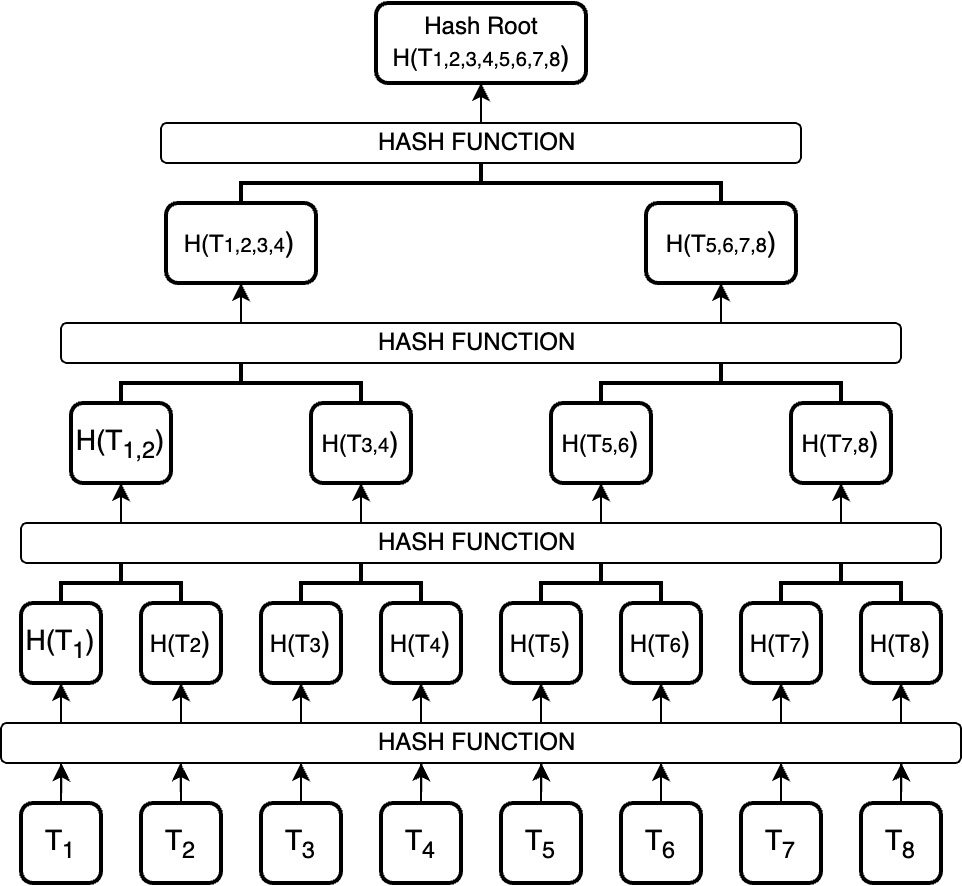
Merkle Tree structure showing iterative hashing of transaction pairs until the root hash is obtained, ensuring transaction integrity.
Proof of Work Mining
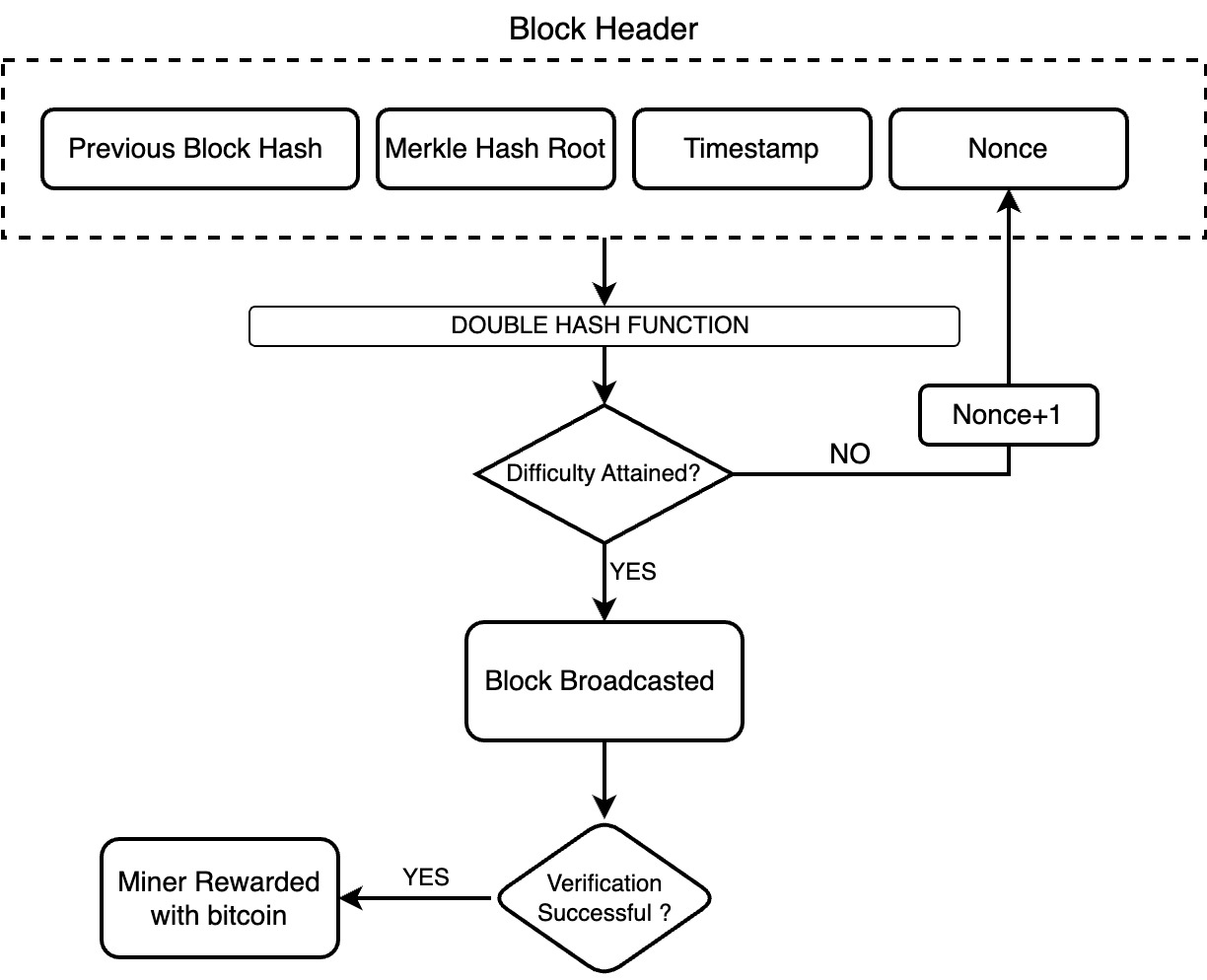
PoW process: miners repeatedly hash the block header (previous block hash, Merkle root, timestamp, nonce) until the hash meets the difficulty target.
Comparative Analysis of Consensus Mechanisms
| Mechanism | Strengths | Weaknesses |
|---|---|---|
| PoW | Secure, reliable, fully decentralized | High energy use, scalability limits, 51% attack risk |
| PoS | Energy-efficient, scalable, low computational cost | Centralization of stake, “nothing at stake” problem |
| BFT | Low energy use, high security, fast transactions | Limited scalability, partial decentralization |
| PoStorage | Energy-efficient, secure, decentralized | Complex to implement, less adoption, storage failure risk |
Key Insights
- PoW offers strong decentralization and security but suffers from high energy consumption and low scalability.
- PoS and PoStorage present more sustainable options but introduce other trade-offs like centralization or complexity.
- Layer 2 solutions and alternative consensus mechanisms can significantly mitigate PoW’s limitations.
Technologies Used
- Python for blockchain and consensus implementation.
- Cryptographic hashing (SHA-256) for Merkle Tree and block hashing.
- Time-based mining simulation for PoW difficulty adjustment.
- Visualization of mining and transaction verification processes.