Most security teams assume reconnaissance begins when an attacker actively scans their systems.
Shodan challenges that assumption.
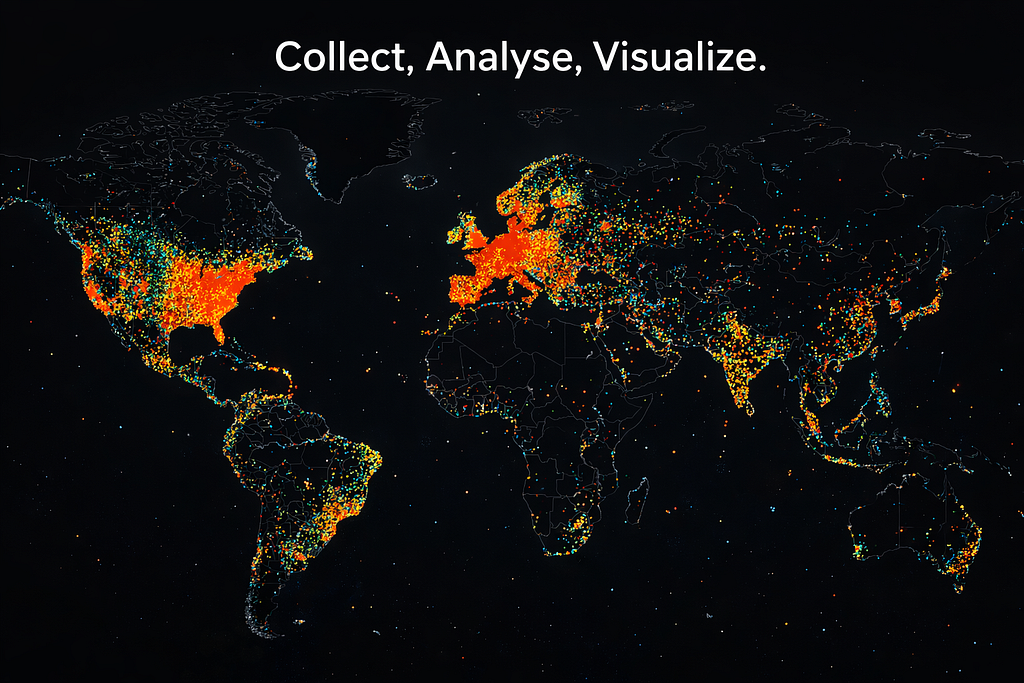
As documented in the official Shodan book by its creator, Shodan is not an exploitation tool. It is a continuous internet measurement system that collects publicly available service information at global scale. Long before an attacker sends a single packet to your infrastructure, a partial picture of it may already exist in public datasets.
Understanding that picture is a defensive advantage.
Shodan operates by collecting service banners exposed by internet-facing systems. Each open service becomes an observable data point. Over time, these observations accumulate into a searchable history of how systems appear from the outside.
HTTP/1.1 200 OK
Server: nginx/1.18.0
Date: Tue, 12 Mar 2024 10:21:43 GMT
Content-Type: text/html
Connection: keep-alive
X-Powered-By: PHP/7.4.33
SSL Cert Subject: CN=device-gateway.local
SSL Cert Issuer: Let's Encrypt Authority X3
Importantly, Shodan does not authenticate, exploit, or bypass controls. It only records what systems choose to expose.
From a security perspective, this reframes Shodan as an external observability layer rather than an attack tool.
One of the recurring themes in the Shodan documentation is that exposure is often unintentional.
Systems become visible due to:
Because Shodan scans continuously and randomly, it breaks the illusion of safety through obscurity. Non-standard ports, uncommon protocols, and low-traffic services are eventually discovered simply through probability.
For defenders, this means that exposure should be treated as inevitable unless explicitly managed.
The book emphasizes that even when services are not directly exploitable, the metadata they expose can still be valuable to attackers.
Banners frequently reveal:
This information enables profiling and prioritization. In practice, it helps attackers decide where to focus, not how to exploit.
Security teams should pay attention to this layer because it shapes the threat landscape before any active attack occurs.
A key insight from the documentation is that reconnaissance no longer requires interaction with the target.
Internet-wide scanning is ongoing. Historical data persists. Exposure today can still be relevant months or years later.
From a defensive standpoint, this changes the security model. It is no longer enough to secure systems internally. Teams must also consider how their infrastructure appears in external measurement platforms.
Ignoring that perspective does not reduce risk. It only blinds defenders to it.
Shodan’s own tooling supports defensive use cases such as monitoring known assets, tracking changes in exposure, and identifying newly visible services.
Used responsibly, Shodan allows security teams to:
It enables teams to answer a critical question early:
What does the internet already know about us?
It is also worth clarifying that this discussion is not intended as a promotion of Shodan as a product.
Like many security tools, Shodan’s more advanced features are gated behind paid tiers, which can be a barrier for individual researchers, students, or smaller teams. This pricing model is a practical reality of maintaining large-scale internet measurement infrastructure, but it does affect who can access certain capabilities.
That said, the core security takeaway does not depend on premium access. The existence of continuous external observation is what matters. Whether or not a team actively uses Shodan, similar visibility already exists through multiple platforms and datasets.
The risk comes from assuming that cost limits visibility, when in reality, exposure is a structural property of internet-facing systems.
Shodan does not create vulnerabilities.
It documents visibility.
Security teams that treat external visibility as part of their threat model are better prepared than those who assume obscurity still works.
Seeing what attackers see is not about thinking like an attacker.
It is about understanding the systems you have actually built.
John Matherly, The Complete Guide to Shodan
Official archive copy:
https://ia803408.us.archive.org/7/items/shodan-book-extras/shodan/shodan.pdf
<hr><p>How Security Teams Can Use Shodan.io to See What Attackers See was originally published in Cyber Security Write-ups on Medium, where people are continuing the conversation by highlighting and responding to this story.</p>